

Published March 21, 2024 · Updated July 3, 2026
You know this moment if you've spent any real time on a drone program. A prototype blade comes back from the printer, it looks right, and then someone asks the question that ruins your afternoon.
Does it actually match the CAD?
You pull out calipers, you measure a dozen points on a curved surface that has thousands of them, and you realize you're basically guessing. Then someone hands you a scan overlay with a full color deviation map covering the entire blade, and honestly, it's a little embarrassing how long teams go without this.
That's the moment 3D scanning earns its keep in drone development. Not as a nice-to-have. As the thing that tells you whether your part is actually right, catches the composite defect before it flies, and rebuilds the part that no longer has a CAD file anywhere on earth.
3D scanning gives drone and UAV teams a fast, non-contact way to capture complex aerodynamic surfaces, reverse engineer components with no CAD file, catch composite defects before flight, and get damaged airframes back in service without waiting on a manufacturer. It shows up across the entire drone lifecycle, from R&D through field repair, and the right scanner depends entirely on what you're capturing.

Key facts up front
Seven use cases
Here's exactly how it plays out
Rapid prototyping and aerodynamic surface iteration

Drone development lives or dies on iteration speed. A propeller blade, wing profile, or fuselage shell goes through multiple physical builds before a design locks, and every one needs to be checked against the digital model to confirm it flies the way the simulation promised.
3D scanning closes that loop fast. Scan the printed or machined prototype, overlay it on the CAD surface, and get a full color deviation map showing exactly where the part diverges from design intent. A curved wing profile has continuous geometry, and small surface deviations change airflow immediately. A scan catches that across the whole surface, not at a handful of points you happened to measure by hand.
No CAD yet? Iterating on an early foam prototype with nothing behind it? Scan it. That becomes your starting geometry in reverse engineering software before the next print run.
Reverse engineering legacy, custom, and undocumented drone components
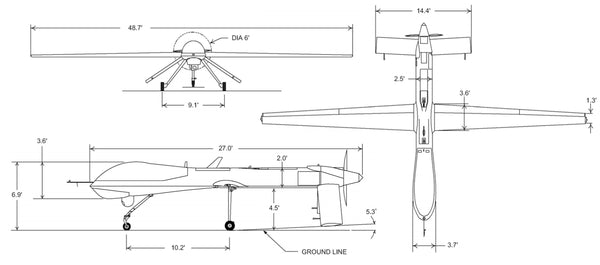
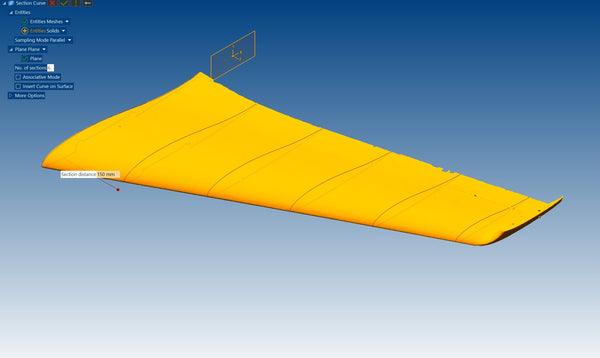
Here's something that surprises people outside the industry: drone components go undocumented constantly.
In every one of these situations, the part exists but the file doesn't. 3D scanning captures the actual geometry straight off the physical part, whether that's a full airframe, a single bracket, or a battery mount someone welded together at 2am before a competition. The scan becomes a mesh, the mesh becomes a parametric CAD model, and now you've got something you can modify, manufacture, or archive permanently.
Who needs this most: teams maintaining older UAV fleets where the original supplier disappeared years ago, and teams building custom drones where every mount is a one-off. Both need a model that doesn't depend on the physical part surviving the next crash.
Quality control and composite airframe inspection
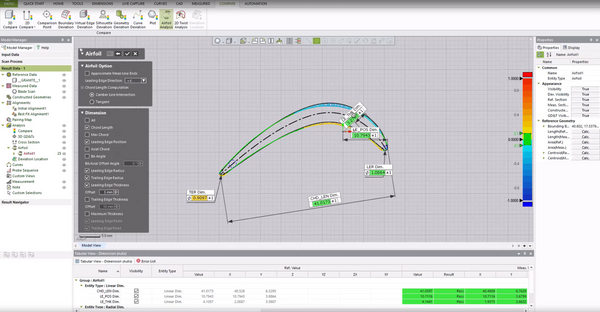
Composite airframes are genuinely hard to inspect by hand. Carbon fiber and fiberglass are curved, low-contrast, and often glossy enough to throw off a scanner that isn't built for it. Delamination and layup defects can hide until they've already wrecked flight performance, and by then it's not a QC problem anymore, it's a warranty claim.
Structured-light and laser 3D scanners handle the contrast and reflectivity problem with the right settings or a light scan-ready prep, then generate a full surface 3D model in a single pass. That model gets compared against the reference CAD in inspection software, and you get a full deviation map instead of spot checks that might miss the one bad section.
Way cheaper than catching it after a flight test failure.
For manufacturers producing drones at volume, this catches warping and layup inconsistency before a defective unit reaches assembly. Honestly, it's wild that some shops still do this by eye.
Damage assessment and field repair

Drones crash. Racing and FPV drones especially, but survey drones, ag drones, and delivery drones all take hits in the field, usually at the worst possible moment for whoever's running the fleet. 3D scanning speeds up repair in two ways:
Scan the damaged component and compare it directly against the undamaged reference geometry to see exactly how much it deformed, and whether it's still within a safe tolerance or needs to be scrapped.
If the damaged part is one of those undocumented custom pieces from use case 02, reverse engineer and print a replacement instead of waiting on a supplier who might not even carry it anymore.
For fleet operators, this turns a multi-week repair cycle into something closer to a same-week fix. That's not a small difference when a drone sitting idle is a drone not earning its keep.
Customization for specific applications
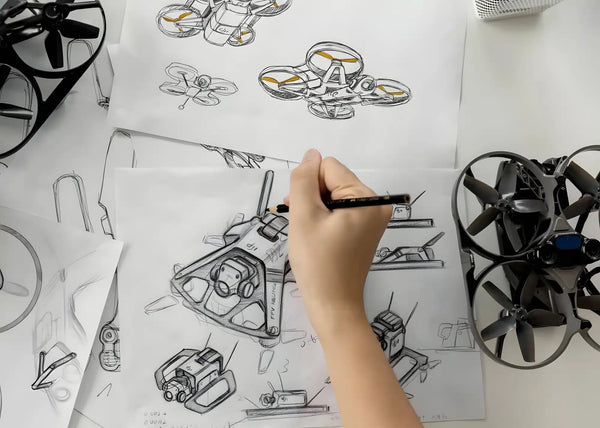
Drones are used across agriculture, surveying, photography, and surveillance. 3D scanning enables customization for these applications, whether it's altering the drone's shape for better stability and battery efficiency or customizing mounts for cameras and other equipment.
Integration of complex components
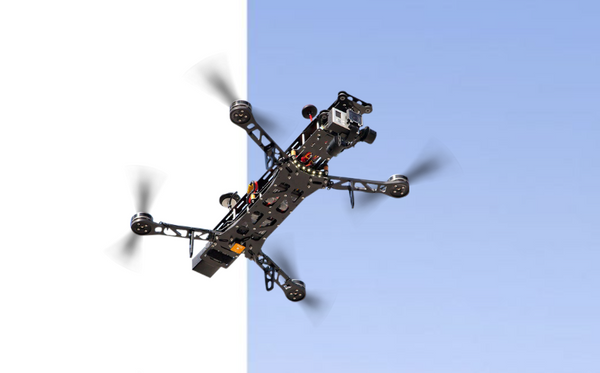
With advanced electronics and miniaturization, drones are becoming more complex. 3D scanning helps integrate these components accurately by ensuring the design accommodates all necessary parts precisely, including sensors, cameras, and battery units.
Simulation and testing
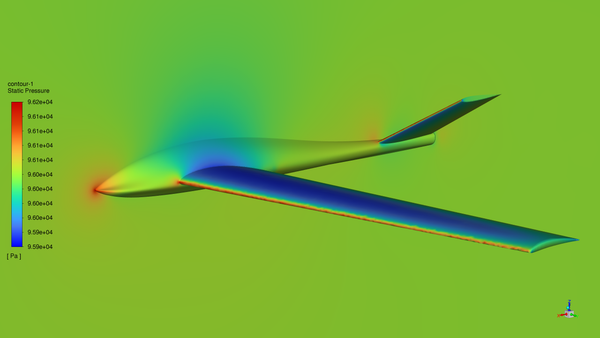
Before physical prototypes are built, 3D models obtained from scans can be used in simulations to predict how drones will perform under various conditions. This helps identify potential issues early in development, saving time and resources.
Scanner selection
Which scanner fits which drone use case
Not every scanning job in a drone program calls for the same hardware. Frame size, surface material, and required accuracy all change the right answer.
For anything that needs to fly and perform
FreeScan Combo, FreeScan UE Pro2, and FreeScan Trak Nova.
Where speed matters more than sub-mm accuracy
EinScan Rigil or EINSTAR Rockit for prototyping, training, or field triage.
Scanner + software + training
Ready to bring this into your drone program?
Whether you're chasing sub-millimeter accuracy on a propeller blade, rebuilding a part that's been out of production for a decade, or getting a fleet back in the air after a rough week of field repairs, the right scanner changes how fast your team moves. 3D Wonders works with drone manufacturers, defense contractors, agricultural operators, and racing teams to match the scanner, software, and training to how your program runs.
FAQ