3D Scanning Solutions for Healthcare & Medical Applications

Precision Built Around the Patient.

From a prosthetic that has to fit one specific limb to a surgical guide that has to match one specific anatomy, there's no standard part to reference. We help clinical and device teams capture accurate 3D data of the human body, so custom fit, function, and comfort aren't left to guesswork.

3D Wonders: A True Partner in Your Clinical Program

Every practice and device team works differently. An orthotist fitting a custom brace, a surgical team planning around a patient's exact anatomy, a device manufacturer validating a new product, each need something different. That's why we don't just sell equipment. We build a plan around your workflow, your patients, and how comfortable your team already is with the technology.

There's no standard part to reference. The fit has to match one specific patient, every time.

  • No Baseline to Work From

    Unlike a manufactured part, there's no CAD file for a human body. Every capture starts from zero.

  • Fit Isn't Optional

    A prosthetic or orthotic that's close enough isn't good enough. Comfort and function depend on capturing the patient's exact geometry.

  • Patients Are Waiting

    Slow modeling and manual measurement delay a device that a patient needs now, not weeks from now.

1 of 3

Trusted By Clinics and Device Teams Like Yours

We support orthotists, prosthetists, surgical teams, and medical device manufacturers.

3D Wonders
3D Wonders
3D Wonders
3D Wonders
3D Wonders
3D Wonders
3D Wonders
3D Wonders
3D Wonders
3D Wonders
3D Wonders
3D Wonders
3D Wonders
3D Wonders
3D Wonders
3D Wonders
3D Wonders
3D Wonders
3D Wonders
3D Wonders
3D Wonders
3D Wonders
3D Wonders
3D Wonders
3D Wonders
3D Wonders
3D Wonders
3D Wonders
3D Wonders
3D Wonders
3D Wonders
3D Wonders
3D Wonders
3D Wonders
3D Wonders
3D Wonders
3D Wonders
3D Wonders
3D Wonders
3D Wonders
3D Wonders
3D Wonders
3D Wonders
3D Wonders
3D Wonders
3D Wonders
3D Wonders
3D Wonders
3D Wonders
3D Wonders
3D Wonders
3D Wonders
3D Wonders
3D Wonders
3D Wonders
3D Wonders
3D Wonders
3D Wonders
3D Wonders
3D Wonders
3D Wonders
3D Wonders
3D Wonders
3D Wonders
3D Wonders
3D Wonders
3D Wonders
3D Wonders
3D Wonders
3D Wonders
3D Wonders
3D Wonders
3D Wonders
3D Wonders
3D Wonders
3D Wonders
3D Wonders
3D Wonders
3D Wonders
3D Wonders
3D Wonders
3D Wonders
3D Wonders
3D Wonders
3D Wonders
3D Wonders
3D Wonders
3D Wonders
3D Wonders
3D Wonders
3D Wonders
3D Wonders
3D Wonders
3D Wonders
3D Wonders
3D Wonders
3D Wonders
3D Wonders
3D Wonders
3D Wonders
3D Wonders
3D Wonders
3D Wonders
3D Wonders
3D Wonders
3D Wonders
3D Wonders
3D Wonders
3D Wonders
3D Wonders
3D Wonders
3D Wonders
3D Wonders
3D Wonders
3D Wonders
3D Wonders
3D Wonders
3D Wonders
3D Wonders
3D Wonders
3D Wonders
3D Wonders
3D Wonders
3D Wonders
3D Wonders
3D Wonders
3D Wonders
3D Wonders
3D Wonders
3D Wonders
3D Wonders
3D Wonders
3D Wonders
3D Wonders
3D Wonders
3D Wonders
3D Wonders
3D Wonders
3D Wonders
3D Wonders
3D Wonders
3D Wonders
3D Wonders
3D Wonders
3D Wonders
3D Wonders
3D Wonders
3D Wonders
3D Wonders
3D Wonders
3D Wonders
3D Wonders
3D Wonders
3D Wonders
3D Wonders
3D Wonders
3D Wonders
3D Wonders
3D Wonders
3D Wonders
3D Wonders
3D Wonders
3D Wonders
3D Wonders
3D Wonders
3D Wonders
3D Wonders
3D Wonders
3D Wonders
3D Wonders
3D Wonders
3D Wonders
3D Wonders
3D Wonders
3D Wonders
3D Wonders
3D Wonders
3D Wonders
3D Wonders
3D Wonders
3D Wonders
3D Wonders
3D Wonders
3D Wonders
3D Wonders
3D Wonders
3D Wonders
3D Wonders
3D Wonders
3D Wonders
3D Wonders
3D Wonders
3D Wonders
3D Wonders
3D Wonders
3D Wonders
3D Wonders
3D Wonders
3D Wonders
3D Wonders
3D Wonders
3D Wonders
3D Wonders
3D Wonders
3D Wonders
3D Wonders
3D Wonders
3D Wonders
3D Wonders
3D Wonders
3D Wonders
3D Wonders
3D Wonders
3D Wonders
3D Wonders
3D Wonders
3D Wonders
3D Wonders
3D Wonders
3D Wonders
3D Wonders
3D Wonders
3D Wonders
3D Wonders
3D Wonders
3D Wonders
3D Wonders
3D Wonders
3D Wonders
3D Wonders
3D Wonders
3D Wonders
3D Wonders
3D Wonders
3D Wonders
3D Wonders
3D Wonders
3D Wonders
3D Wonders
3D Wonders
3D Wonders
3D Wonders
3D Wonders
3D Wonders
3D Wonders
3D Wonders
3D Wonders
3D Wonders
3D Wonders
3D Wonders
3D Wonders
3D Wonders
3D Wonders
3D Wonders
3D Wonders
3D Wonders
3D Wonders
3D Wonders
3D Wonders
3D Wonders
3D Wonders
3D Wonders
3D Wonders
3D Wonders

Every clinical workflow starts somewhere different, so we meet you there.

  • Technology & Training

    Clinical-grade scanners, modeling software, and hands on training tailored to your practice or lab.

  • Guidance & Implementation

    From choosing the right scanner to building a repeatable patient-capture workflow, our specialists help you get it right.

  • Ongoing Expertise

    Dedicated technical support so your patient scanning and modeling workflows stay accurate and reliable.

1 of 3

Have a production challenge in mind? Let's talk it through.

Solutions Matched to Your Application

Every patient, every device, and every clinical setting is different, so we help you choose the tool that actually fits.

Medical & Clinical 3D Scanner

EinScan Medixa

EinScan Medixa

All-in-one 3D scanner built for O&P care

  • Wireless, all-in-one design with onboard processing, no external computer needed during scanning
  • Contact-free capture reduces patient stress, especially for children and elderly patients
  • Pre-configured scan presets for cranial, face, limbs, torso, foot, and socket to save time per case


Accuracy: RMS < 0.3 mm | Working Distance: 200 to 1500 mm | FOV: up to 1090 x 1260 mm

Reverse Engineering Software

EXModel

EXModel

Native SHINING 3D scan-to-CAD software.

  • Best For: Direct mesh processing and rapid CAD reconstruction within the SHINING 3D ecosystem.
  • Key Features: One-click data transfer, automated feature recognition, primitive feature extraction, and streamlined point cloud processing.
  • Ideal Users: Product designers, rapid prototyping shops, and engineering teams using industrial 3D scanners.

3D Inspections Software

SHINING 3D Inspect

SHINING 3D Inspect

Integrated inspection software for SHINING 3D workflows

  • Best For: Seamless, budget-friendly scan-to-inspect workflows using structured light and blue light scanners especially for Shining 3D 3D Scanner users.
  • Key Features: Direct point cloud processing, automated color deviation maps, CAD import, and essential geometry analysis.
  • Ideal Users: Production inspection teams, industrial design workshops, and localized manufacturing metrology cells.

Not sure what fits your program? Consult with us and we'll show you, hands on.

Where Our Partners Put This to Work

  • Custom Prosthetics & Orthotics

    Capture a patient's exact anatomy to design a device that actually fits, not just one sized close.

  • Patient-Specific Surgical Guides & Models

    Build surgical guides and anatomical models matched to one specific patient's geometry.

  • Medical Device Design & Fit Testing

    Validate a new device against real patient anatomy before it goes to production.

  • Anatomical Modeling for Research & Education

    Digitize anatomical structures for study, training, or research documentation.

1 of 4

See 3D Scanning in Your Field

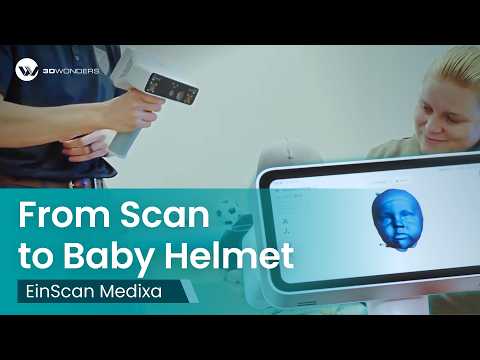
3D Scanning Video 1
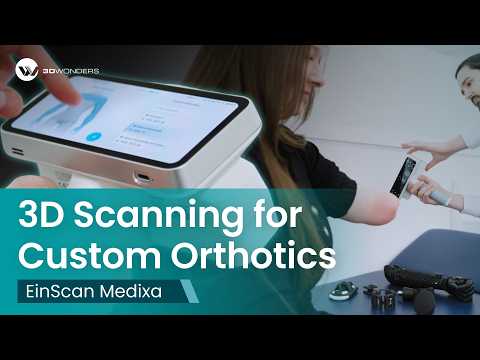
3D Scanning Video 2
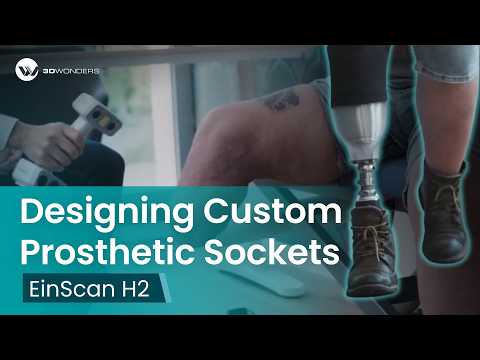
3D Scanning Video 3

Ready to Build a Workflow Around Your Patients?

Whether you're fitting a custom device, planning a procedure, or validating a new product, we'd love to hear what you're working on and help you build a workflow that fits.

Frequently Asked Questions

Looking for something specific? Let us know, and we’ll be happy to assist you.

What is 3D scanning used for in healthcare and medical applications?

It's used to capture patient-specific anatomy for custom prosthetics, orthotics, surgical guides, and medical device design.

How does 3D scanning help with custom prosthetics and orthotics?

It captures the exact shape of a patient's limb or anatomy, so the device is designed to that specific geometry instead of a standard size.

Is 3D scanning safe to use on patients?

Yes. Both the light sources used, white LED and infrared VCSEL, are certified eye-safe (Class I), and scanning is non-contact, unlike traditional methods like plaster casting. This makes it a cleaner, more comfortable option, especially for children and elderly patients.

How accurate are medical 3D scanners?

Accuracy depends on the scanner and the area being captured, but clinical-grade systems are built to meet the precision custom devices require, typically ranging from 0.1 mm to 0.4 mm.

Can 3D scanning be used to create patient-specific surgical guides?

Yes. A patient's scanned anatomy can be used to design a guide matched to their exact geometry for a specific procedure.