

Published March 21, 2023 · Updated May 20, 2026
Car 3D scanning captures high-resolution digital geometry of real vehicle components in minutes, replacing slow manual measurement with data accurate enough for CFD simulation, reverse engineering, and quality inspection.
Performance automotive teams that bring scanning in-house report faster development cycles, tighter tolerances, and significantly reduced dependence on outsourced prototyping.
Key points
The problem
The real cost of not having 3D scanning in your workshop
Here's a scenario performance automotive engineers know too well. Your team is three weeks into a CFD-based aerodynamic study. The geometry you're simulating was digitized by an outside vendor six months ago. The car has changed. The simulation results are suspect. You go back to the queue.
Waiting on outsourced scan data isn't just inconvenient. It burns development cycles that are already tight.
It also introduces a gap between your physical car and your digital model, a gap that directly affects simulation confidence. Car 3D scanning solves this by putting high-resolution, inspection-grade geometry capture directly in the hands of the engineering team, on demand.
The basics
What car 3D scanning actually is, and why it's different from manual measurement
Car 3D scanning digitizes the physical shape of a vehicle component or full body into a detailed 3D model. By projecting structured light or laser lines onto a surface and capturing the response with cameras, a scanner recreates complex parts with geometric accuracy that calipers and gauges can't approach on free-form surfaces.
Modern automotive teams use scan data across four core workflows: design and prototyping, aerodynamic simulation, reverse engineering, and quality inspection. In each, the precision and speed of scan-derived data directly affects the quality and pace of decisions downstream.
The automotive segment led the global 3D scanner market with roughly 42% share in 2024, according to SNS Insider: the single largest end-user vertical, driven by constant demand for precision in design and manufacturing.
Why it matters
Why performance car development specifically needs scan-grade data
High-performance projects (racing cars, custom aero packages, aftermarket powertrain upgrades) run on tenths of a millimeter and tenths of a second. The gap between a part that fits perfectly and one that introduces drag, flex, or misalignment can be invisible to the eye and catastrophic on the data sheet. Manual tools fall short in three ways:
Calipers and gauges can't capture free-form surfaces
A splitter underside, a diffuser channel, or a custom intake manifold has geometry that point measurements fundamentally can't document.
Outsourced scanning introduces delays
Waiting days or weeks for scan data means lost development cycles and data that reflects yesterday's physical car, not today's.
CFD is only as good as its geometry
Feed an approximated surface into a CFD solver and you get approximated aerodynamic outputs.
Case study · aftermarket
APR Performance and in-house car 3D scanning
A.P.R. is a leading performance aftermarket supplier with over two decades of experience designing and manufacturing race cars. Before 3D scanning, their aerodynamic development relied on full-scale wind tunnel models and manual prototyping: expensive, time-consuming, and frequently dependent on outside vendors.
When APR brought the EinScan Rigil in-house, four things changed concretely:
Fast, accurate data capture
High-resolution surface data on complex parts, including reflective surfaces common on performance vehicles, in minutes, not days.
Direct CFD integration
Scanned models export directly into CFD software, enabling aerodynamic testing iterations the same day geometry is captured.
Reverse engineering on demand
Instead of sourcing expensive or discontinued components, technicians scan originals, repair geometry digitally, and manufacture replacements.
Eliminated outsourcing
Owning the capability in-house cut external turnaround times out of the development cycle entirely.
Want similar results in your workshop? The EinScan Rigil delivers fast, accurate car scanning for aerodynamic, reverse engineering, and prototyping workflows.
Case study · motorsport
Vulcan Alpha at the Nürburgring: scanning under real race conditions
If APR shows what in-house scanning does for an aftermarket specialist, Vulcan Alpha shows what it does under race conditions, where the environment itself fights against accurate data capture.
Vulcan Alpha is a motorsport engineering company led by Misha Charoudin, operating at the Nürburgring. Its mission is to develop bespoke aero components, including carbon fiber wing systems with integrated drag reduction systems (DRS), that fit the OEM chassis without modification: no drilling, no cutting, no structural compromise.
How Vulcan Alpha uses SHINING 3D technology
Vulcan Alpha uses the FreeScan Trak Nova, a wireless, large-FOV optical 3D measuring and dynamic tracking system, as the foundation of their workflow. Its large tracking field of view captures an entire vehicle in a short time with highly accurate geometry for CFD. Engineers previously stitched multiple panels together manually; the scanner now delivers near-perfect alignment automatically.
The race-car problem: track cars often leak fluids and have complex surfaces where markers can't be physically attached. The FreeScan Trak Nova enables marker-free tracking on these difficult surfaces, so scans can be completed even in challenging conditions.
“For us, it is very important to use SHINING 3D products to make sure the parts we create match the actual model of the car.”
Misha Charoudin, CEO and Co-Founder, Vulcan Alpha
The confidence isn't just internal. SHINING 3D products are also used by OEMs, and when Vulcan Alpha tells OEM clients they use SHINING 3D technology, it strengthens client trust and supports the growth of their business. Co-Founder Lapo started his scanning journey with manual measurement nearly 20 years ago; adopting SHINING 3D technology marked a major step forward.
Vulcan Alpha also integrates scanning with a BigRep large-format 3D printer and a Mekanika CNC milling machine, managing everything from scan capture to prototyping and testing in-house:
That closed loop is what separates teams that iterate fast from teams that wait. The full Vulcan Alpha case study is published on the SHINING 3D website.
Applications
The four core applications of car 3D scanning in performance development
Rapid prototyping and design validation
Traditional prototyping requires expensive tooling and long lead times. Scanning captures the exact geometry of existing parts or assemblies and produces CAD-ready data immediately, so digital assets can be tested, modified, and 3D printed before a physical prototype is built. The iteration loop compresses from weeks to hours.
Aerodynamic optimization for CFD
CFD simulations of airflow, downforce, and drag are only as accurate as the geometry they model. Scan-derived geometry reflects the actual physical car, which matters when small shape changes between trim levels or setups produce measurable performance differences.
Reverse engineering legacy and custom parts
Older performance cars and custom builds often have no surviving digital files. Scanning captures the physical geometry and converts it into editable CAD through reverse engineering software, which is critical for vintage motorsport where original components can be impossible to source. See how 3D scanning is used for reverse engineering.
Quality inspection and fit verification
Comparing scan data against CAD reveals deviations, misalignments, and manufacturing defects before assembly. Where tolerances directly affect function (suspension geometry, aero mounting points, drivetrain alignment), this prevents costly rework.
Side by side
Car 3D scanning vs. traditional measurement methods
ROI
The financial case for in-house car 3D scanning
of total manufacturing costs can be lost to defects (recalls, repairs, wasted materials), per Managed Outsource Solutions.
of surveyed manufacturers have invested significantly in digital twins, 3D modeling, and 3D scanning, per Deloitte's 2024 Manufacturing Industry Outlook.
Car 3D scanning catches dimensional errors and fitment issues before parts reach assembly, rather than after. For a motorsport team or performance aftermarket supplier running tight budgets, cutting defect-related rework meaningfully shifts what's financially possible. Beyond error reduction, the business case stacks up in three more ways:
Eliminated outsourcing spend
External 3D scanning services charge per session or per project. In-house capability pays back quickly against recurring scan requirements.
Faster time to market
Development cycles that stretched weeks due to scan data turnaround compress to days or hours: a commercial advantage, not just an engineering convenience.
OEM-level credibility
As the Vulcan Alpha case shows, professional scanning technology directly influences client trust, particularly when the client base includes OEM partners evaluating supplier capability.
Buyer checklist
Choosing the right 3D scanner for performance automotive work
Different engineering workflows call for different scanners. Here's how to match capability to your actual use case.
The precision your workflow demands
For aerodynamic development and tight-tolerance inspection, metrology-grade accuracy is necessary: volumetric accuracy documented against VDI/VDE 2634 or ISO 10360 and verified in an ISO/IEC 17025 accredited lab. For initial capture, rapid prototyping, or scan-to-CAD where speed matters more than end accuracy, a professional-grade scanner offers the right balance.
Surface complexity and reflectivity
Reflective, glossy, or dark surfaces, common on performance cars, cause problems for some scanners. Hybrid light technology (blue laser + infrared) handles mixed surfaces in one session without spray or separate setups. Marker-free capability matters for full-body capture.
Software and workflow integration
Your scanner is the start of the workflow, not the end. Make sure it exports data compatible with your CAD and simulation software. One-click import, direct CFD export, and clean mesh output directly affect how much time you spend processing data rather than using it.
Go deeper with our guide on how to choose a handheld 3D scanner for metrology.
The lineup
Top 3D scanners for performance automotive development
01EINSTAR Rockit: Best entry point for aftermarket shops and custom builders
Best entry point for aftermarket shops and custom builders
EINSTAR Rockit
Not every performance automotive workflow starts at industrial metrology, and the Rockit is built for that gap. It handles real automotive work: body kits, trim panels, brackets, intake manifolds, interior surfaces, and full exterior panels.
For shops moving from manual measurement to scan-derived CAD without the overhead of an industrial metrology system, the Rockit is the logical first step. It outputs into EXStar Hub software and exports mesh formats compatible with EXModel and QUICKSURFACE. The jump from "measuring with calipers" to "scanning a bumper and reverse engineering a custom lip kit" is much shorter than most shops expect.
02EinScan Rigil: Best for in-house automotive scanning and reverse engineering
Best for in-house automotive scanning and reverse engineering
EinScan Rigil
From $3,499.00
It's particularly well suited for teams moving their first scan operations in-house and for aftermarket specialists who need fast, reliable geometry capture across a variety of part sizes.
03FreeScan Combo Series: The most affordable metrology 3D scanner on the market
The most affordable metrology 3D scanner on the market
FreeScan Combo Series
Starting at $11,999.00
The practical choice for teams that need quality inspection alongside reverse engineering: checking manufactured aero parts against design intent while also capturing geometry for modification workflows.
04FreeScan Trio: Best for large-scale and marker-free automotive scanning
Best for large-scale and marker-free automotive scanning
FreeScan Trio
Built for teams scanning large assemblies or complete vehicle bodies where placing physical markers isn't practical and accuracy still needs to meet industrial metrology standards.
05FreeScan Trak Nova: Best for full vehicle capture and motorsport conditions
Best for full vehicle capture and motorsport conditions
FreeScan Trak Nova
The right tool when you're scanning full car bodies for CFD, when marker placement is impractical (fluid-contaminated race surfaces), or when OEM-level accuracy documentation is required for client work.
Software
Converting scan data into engineering-ready CAD
A 3D scan produces a mesh. Engineering workflows need editable CAD. That conversion is where most teams lose time or accuracy, and the right software makes the difference. Two options integrate directly with SHINING 3D scanning workflows:
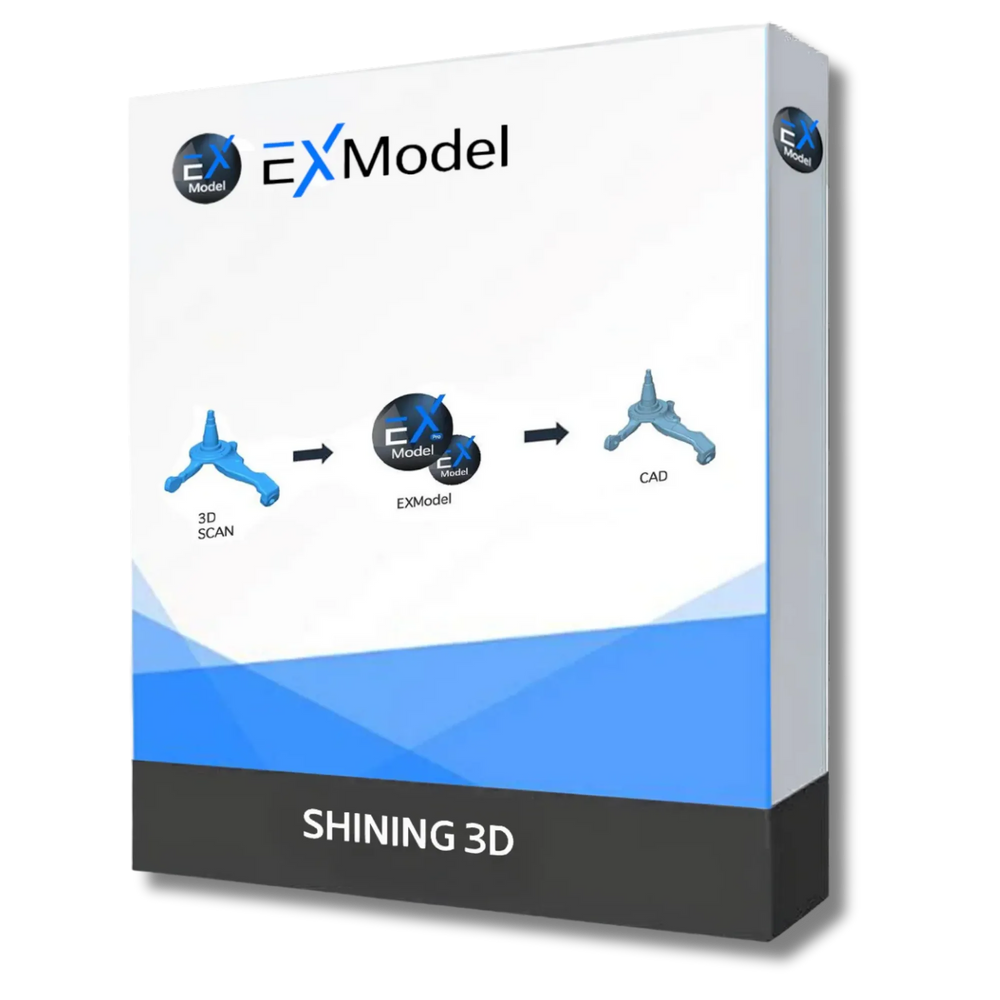
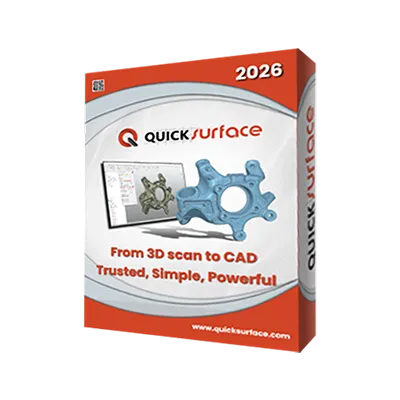
Both are available at 3D Wonders, including reverse engineering bundles that combine scanner hardware with software licensing.
Measure it
Key metrics to track when evaluating your car 3D scanning investment
Justify the tool by measuring what changes:
What's next
Future trends: where car 3D scanning is going
The trajectory is clear. Digital twins, virtual representations of physical assets, are increasing 3D scanning's strategic importance, with manufacturers using real-time scan data to continuously update digital twins for predictive maintenance and operating efficiency. For performance automotive specifically:
Machine learning-enhanced aero optimization
Scan data feeding AI-driven generative design tools will produce geometry options human engineers wouldn't arrive at manually.
Real-time digital twins for race cars
Continuous scan-derived geometry updates feeding live simulation: not just pre-season documentation, but ongoing track-to-simulation pipelines.
Additive manufacturing integration
Scan data informing direct 3D printing of race-ready components closes the loop from measurement to manufactured part. Teams like Vulcan Alpha already operate this way.
Benchmark tracking across generations
Scanning successive vehicle generations against each other provides quantitative comparison of design evolution, previously achievable only with full wind tunnel programs.
Free consultation
Ready to bring car 3D scanning in-house?
Teams that own their scan capability move faster, iterate more, and produce better-fitting parts than teams waiting on external vendors. A 25% reduction in production errors is documented, and development cycle compression is measurable from day one.
The right scanner depends on whether you're doing full-body capture for CFD, reverse engineering specific components, or running inspection against tight tolerances. 3D Wonders matches the right SHINING 3D hardware to your actual automotive engineering workflow.
Request a free consultationOr explore the full range directly:
FAQ